
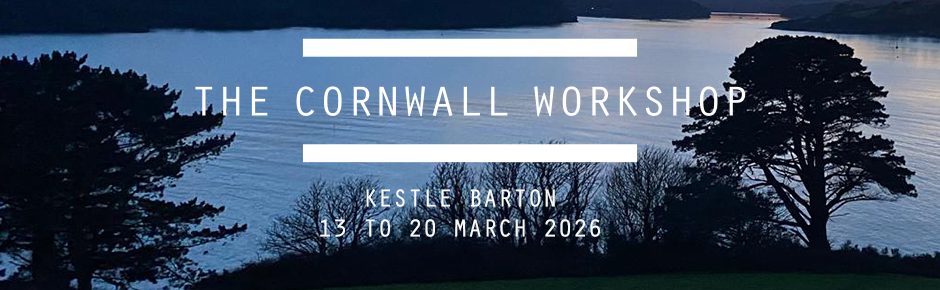
Responses
Mix of participants
Ben Sanderson: The curation of the group felt well considered, with interesting points of connection over multiple disciplines. The South West is a huge region, and being at the tip of it often feels like it is hard to connect with artists and curators further up the county. To spend a week getting to know other people working in the arts from across the area was great. Opportunities that bring people together like this are rare to find.
Garry Loughlin: I feel the people chosen and brought together were very well suited. We all gelled immediately. There was a wide range of disciplines within the group, which made it a very enriching experience for me. I felt lucky to meet new people and learn how they work. From all the conversations and the sharing of work I feel that my teaching practice has been enriched.
Mark Leahy: The mix of kinds of experience and generations, alongside the range of practices, meant that there were very different views and perspectives across the group. This felt important in perhaps causing us (me) to question some of my assumptions, and being open to hearing from very different makers and thinkers.
Holly Antrum: It has taken me many years to build up relevant arts connections in the region and the workshop suddenly opened things up in a really vibrant and affirming way. It feels like there is dedication through people’s understanding of the region, and a positive choice of being here or staying connected with what’s here.
Laura Hopes: So much of my artistic practice has been developed in the South West and the relationships and networks have grown from a distinctive sense of accountability to this artistic ecosystem. It felt really good to reinforce that, but also to have input from participants with recent or current experiences of working outside of that framework.
Bronwen Buckeridge: I thought the group was very well curated. The inclusion of participants from a range of different but related disciplines allowed for lots of different conversations to develop over the week, without it being overwhelming. A shared understanding of the South West art space created an easy sense of connection and common ground. There was also a feeling that the new and deepening relationships formed throughout the week were there to be continued.
Anna Boland: Being part of the group provided a great opportunity to develop new connections and it also highlighted and reinforced some invisible connections that sometimes get overlooked when working in more rural locations.
Programme
Mark Leahy: It was great to see Ane’s films in the context of CAST with a really engaged and enthusiastic audience, who asked questions that I felt drew something more from the event than a regular presentation might have done, and seeing the film about an art school experiment in the context of, and on the campus at, Woodlane added to the sense of its importance and made the questions it was asking more acute. Hearing Ane speaking in more detail about her work brought added context to the exercises and activity of the week, giving a sense that the work at Kestle Barton was part of a bigger project, and connected to discussions and concerns across Europe.
Anna Boland: The short individual presentations on the first day provided a glimpse into all the participants’ individual practices and enabled starting points for conversations and connections to develop. Undertaking the 1:1 supervised / supervisee sessions provided a great opportunity to get feedback and discuss practice in more depth, which is so vital and crucial to us all as artists.
Robin Whitehouse: The ‘“studio visit’” was a moment that I got a lot out of, having the time to just discuss each other’s works and for me to get insights into works that I had never previously had the opportunity to share. Also the analysis of the studio visit where we all took notes and drawings has completely changed the way I now think about this dynamic.
Josie Cockram: I particularly enjoyed Adam’s Chodzko’s workshop. I liked the focus on embodied, tacit transmission and I’ve been thinking ever since about how I can apply that more within my work. For me, this workshop activated some of Luce Irigaray’s thinking about the importance of listening in teaching. And, as I teach online where everything offered becomes information to be processed, rarely addressing the body, I’m increasingly focused on creating extra-linguistic experiences as provocations for my students.
Holly Antrum: The sessions that I valued most were everyone’s presentations – hearing from artists about their practice in a direct exchange is really valuable. I also therefore enjoyed the longer format for the conversations that happened within the mentoring exchanges. Adam’s dreaming workshop bonded the group, because it felt so special and magical to give and receive unique imagined objects in the orchard, and be able to carry them for the remaining days of our time in Kestle Barton. I had a lot of good conversations during the time – in fact I haven’t talked so much in ages.
Bronwen Buckeridge: I was fascinated by the observed tutorial set up by Ane. I had the role of responding to the session through creative writing. The experience of writing in real time reminded me how much I like working this way, and how writing can be a kind of physical encounter. The session played into my interest in archives, how data is captured and ideas of constraint. Adam Chodzko’s dream workshop in the orchard has stayed with me. It was still and thoughtful and expansive in a very different way to the other sessions throughout the week.
Location
Garry Loughlin: I felt spoiled to have a week staying in such a beautiful setting. The accommodation was stunning and comfortable. The meals prepared by the lovely Shane were tasty and plentiful. The accommodation and hospitality was very important because it was something we didn’t need to worry or think about, which allowed us to be present for the entire week.
Josie Cockram: It was very important to be together in this space. Given the intensity of the workshop, space to go out and walk and swim was also vital. During the week we were there, spring arrived. To be in this beautiful landscape, and so well hosted, was special.
Ben Sanderson: Kestle was an incredibly beautiful and calming space to be in, fostering lots of conversation and activities due to its location. It felt very important to be able to eat together and all stay in the same place. This allowed conversation to flow more naturally as well as pick up from where you left off the day before.
Robin Whitehouse: It was very good to stay so local to Kestle and the days we spent in the garden and orchard had a dreamlike quality that was only there because we didn’t need to leave. It was good to walk around the surroundings and not to be rushing.
Joe Lyward: I felt that eating together formed an important part of each day to either take a break, get to know the other participants, or speak further about the content of the day.
Neil Chapman: It shouldn’t be underestimated the part that the accommodation and hospitality played in setting the scene and atmosphere for a workshop of this nature. There will always be some risks involved in bringing a group of relative strangers together for a period of intensive work. The comfort of the accommodation and the provision mitigated that risk.
Holly Antrum: Despite not liking cold water, I had a spontaneous dip in the Helford, and made the most of the peace, beauty and tranquility of the place. I was really enchanted by seeing spring unfold in south Cornwall.
Value and personal outcomes
Anna Boland: I have developed new connections with artists in the South West, and have continued conversations and exchanges of ideas with them since the workshop, including taking part in a studio visit. The workshop has also enabled the formation of “critical friends,” which is vital for ongoing artist development. In the longer term, it has provided the connections to help build a supportive network that will continue to inform and strengthen my practice through sustained peer feedback and collaboration.
Robin Whitehouse: The existence of The Cornwall Workshop means that at points the wider public will encounter a group of artists – the bar man at the pub serving thirteen artists, or the walkers who pass by Kestle and hear about what’s going on. This idea that, year after year, artists will gather and share and learn at Kestle highlights the relevance of the art scene in the South West to a broader public who hear about it. I think in itself this is of huge value. In the long term it also links mixed generations of artists who have all participated in the workshop, who will continue to work together and grow new art spaces, discussions and exhibitions, which will all reach a wider public in times to come.
William Arnold: The workshop has given me a greater awareness of practices less directly related to my own and an increased confidence in my ability to critically engage with them.
Laura Hopes: I have developed a close group of peers with whom I have shared moments of vulnerability and experimentation, over a period that is hard to create space and time for in the normal running of life. I have met with several of these people since the workshop and shared practice and studio time. This role of critical friend is a rare and valuable benefit post-Cornwall Workshop.
Mark Leahy: I felt supported in my work as a teacher, feeling that there were skills I hold, and strategies that I have developed over a number of years that have value. This has been reassuring, and given me some added confidence in potentially developing my work as a mentor or facilitator outside of a formal art school context. It also encouraged me in thinking about alternatives to the model of art school that has developed in recent decades and to think about how I can support the professional and creative development of practice among my peers, or in my region.
Bronwen Buckeridge: The workshop gave me the chance to experiment with different forms of writing, in real time during the observed tutorial, and in interview form with Ben Sanderson. In the longer term, I feel encouraged to continue experimenting with writing as practice, and to explore how it might become a more central part of my work. The workshop also reminded me of the value of sharing work with like-minded peers, and how many of those there are nearby.